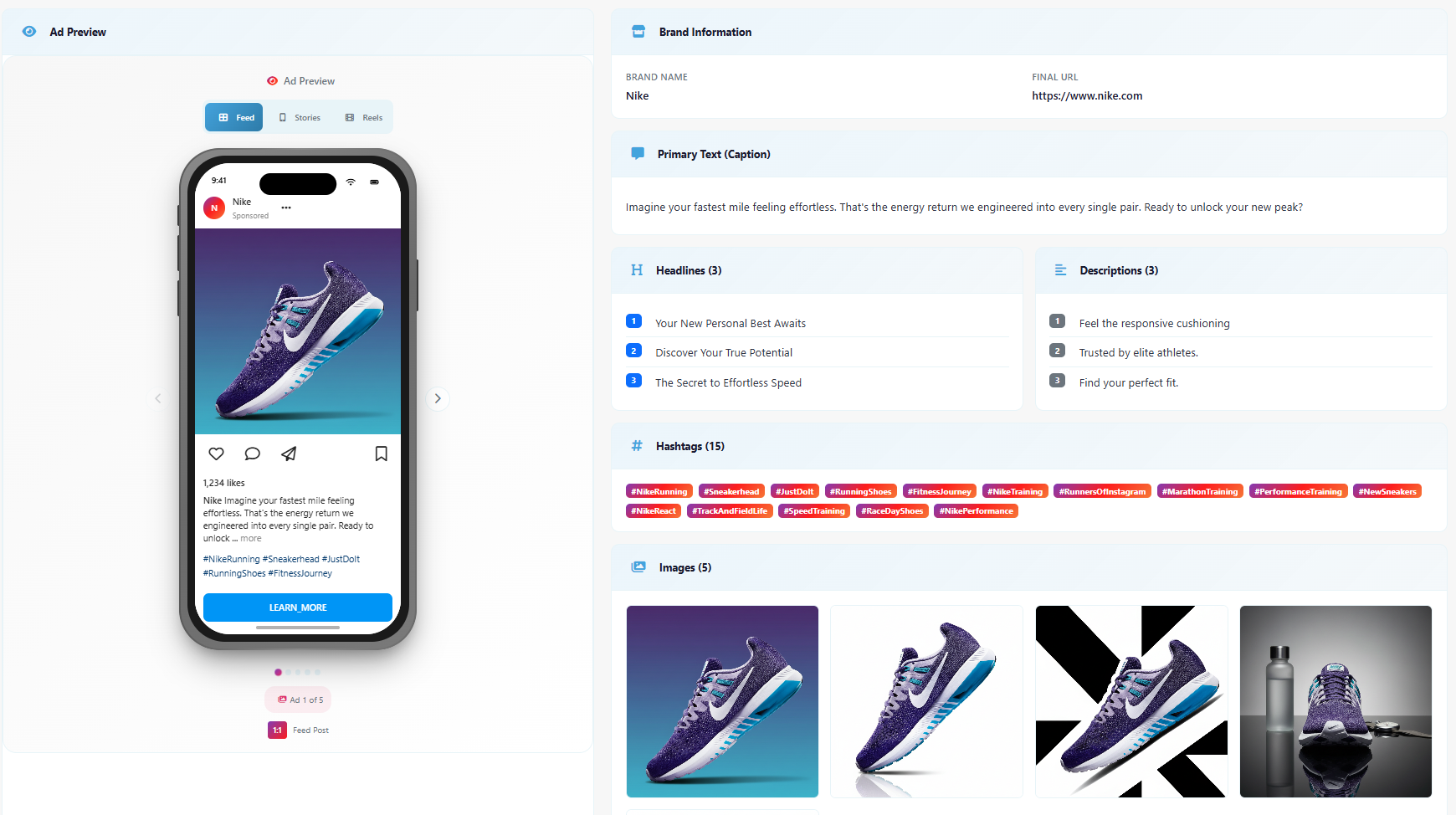
Generated ad copy usually fails in one of two ways. Either it is written once and pasted everywhere, so it overflows on one network and looks thin on another, or it is written to a length and says nothing.
markXpand generates copy per platform and per placement, inside each network's own rules — character limits, how many headlines and descriptions the format expects, where text is allowed to sit. It then renders the result into a live preview of the ad as it will actually appear in the feed, which is the only reliable way to catch copy that technically fits but reads badly.
Creative follows the same principle. A story is not a cropped feed post, so each ratio is generated as its own image — 9:16 for stories and reels, 1:1 for the feed, 16:9 for display and video — and nothing important lands under a caption or outside the safe area.
All of it is a starting point rather than a final answer. Every headline, description and image is editable, regenerable and replaceable before anything launches.